PROJECT OCTANT :

Project Overview
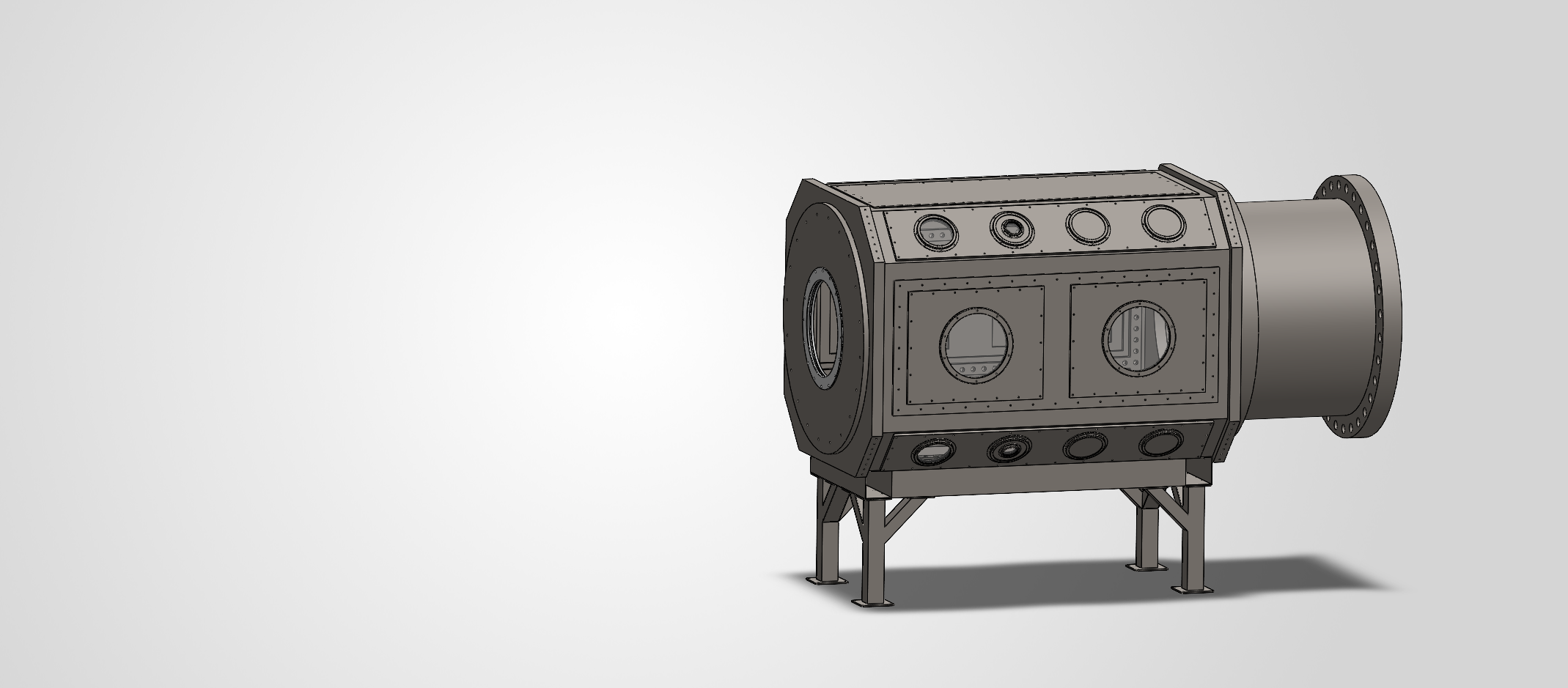
Project OCTANT is the development of a modular octagonal test section for Embry-Riddle Aeronautical University’s reflected shock tunnel facility. The test section serves as the primary experimental environment of the facility, providing optical access to the test flow while supporting models, instrumentation, and interchangeable experimental configurations. The design must withstand both vacuum and positive-pressure conditions while integrating with the surrounding nozzle, diffuser, and facility hardware.
Key requirements include large optical access, adaptable viewport interfaces, modular nozzle and diffuser connections, internal equipment mounting, and accommodation of facility recoil during operation. OCTANT uses its octagonal geometry to provide multiple accessible mounting and viewing surfaces while maintaining a configurable architecture capable of supporting a wide range of future hypersonic experiments.
Interchangeable Viewport Interfaces
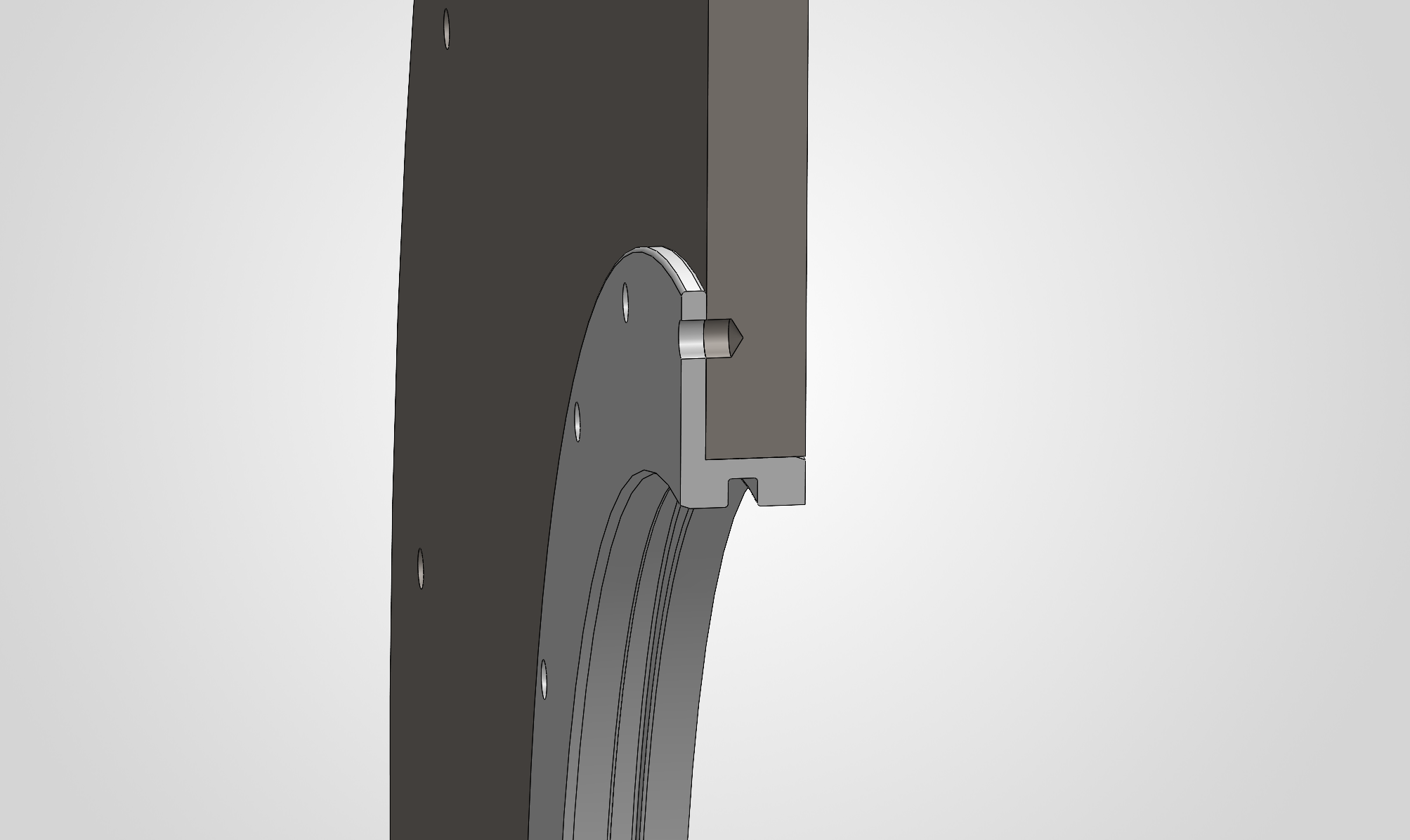
The viewport interfaces were developed to expand the optical and diagnostic capabilities of OCTANT while allowing window configurations to change without modifying the primary test section structure. Each interface provides direct optical access to the test flow while maintaining a standardized connection to the test section.
An interchangeable adapter plate system separates the permanent viewport structure from the experiment-dependent window geometry. These plates allow different window sizes, shapes, and optical components to be installed while retaining the same mounting and sealing interface to the test section.
This approach allows OCTANT to adapt to changing experimental requirements without manufacturing entirely new viewport assemblies. Only the adapter components need to be replaced, creating a modular system that simplifies configuration changes while maximizing optical access and experimental versatility.
Test Section-to-Nozzle Interface
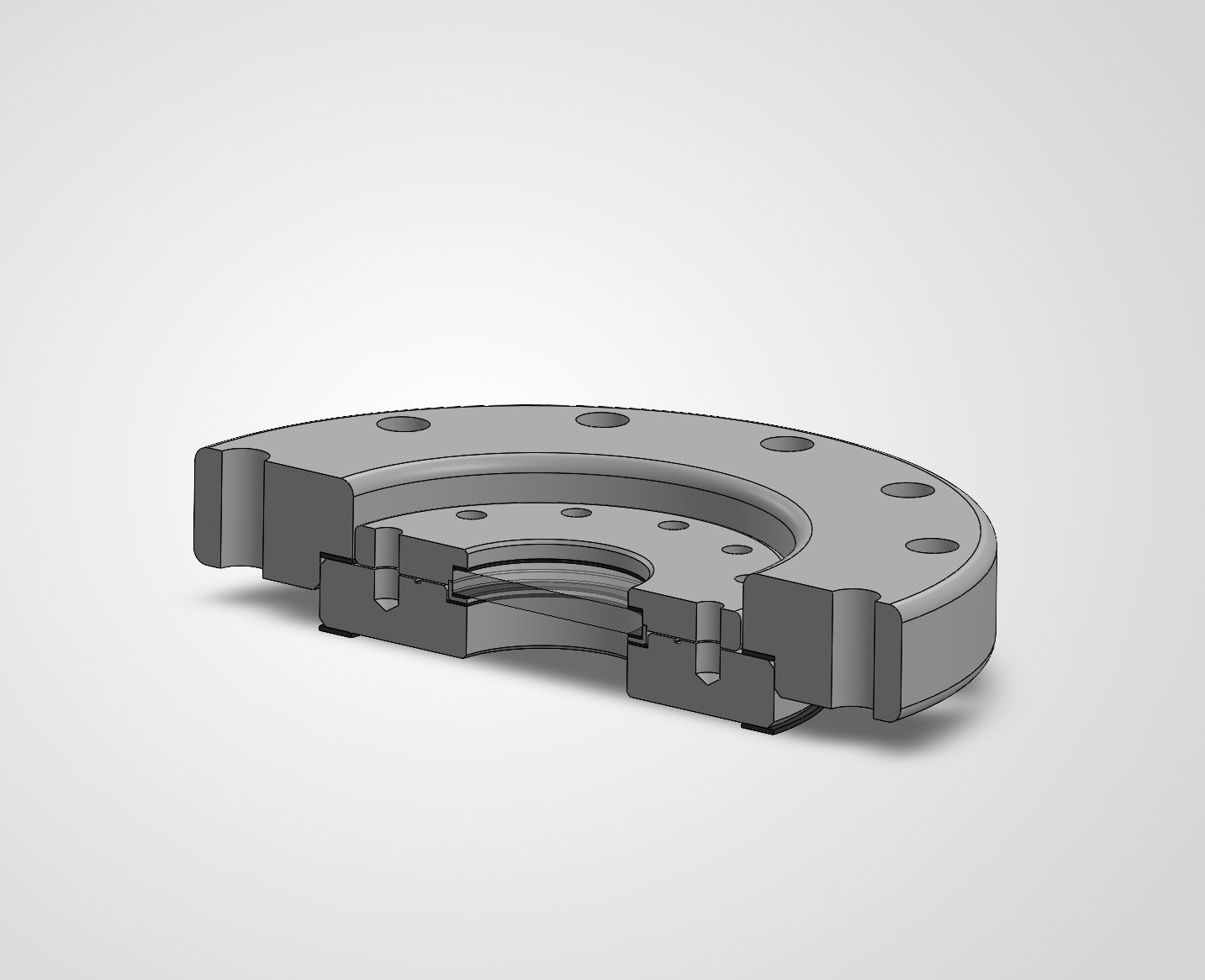
The test section-to-nozzle interface was designed to accommodate multiple nozzle configurations while maintaining a consistent connection to OCTANT. Because future experiments may require different nozzle exit geometries and outer diameters, the interface needed to adapt without requiring modifications to the primary test section.
A replaceable nylon sleeve provides the transition between the nozzle exterior and the test section sealing system. Different sleeves can be manufactured to match varying nozzle outer diameters while maintaining a standardized outer interface with the test section. The sleeve also supports the sliding seal arrangement required to accommodate relative axial motion between the nozzle and stationary test section during facility operation.
By separating nozzle-dependent geometry from the permanent test section hardware, the interface allows future nozzle configurations to be integrated through relatively simple interchangeable components. This creates a standardized connection point while preserving the adaptability required for continued development of the reflected shock tunnel.
My Role
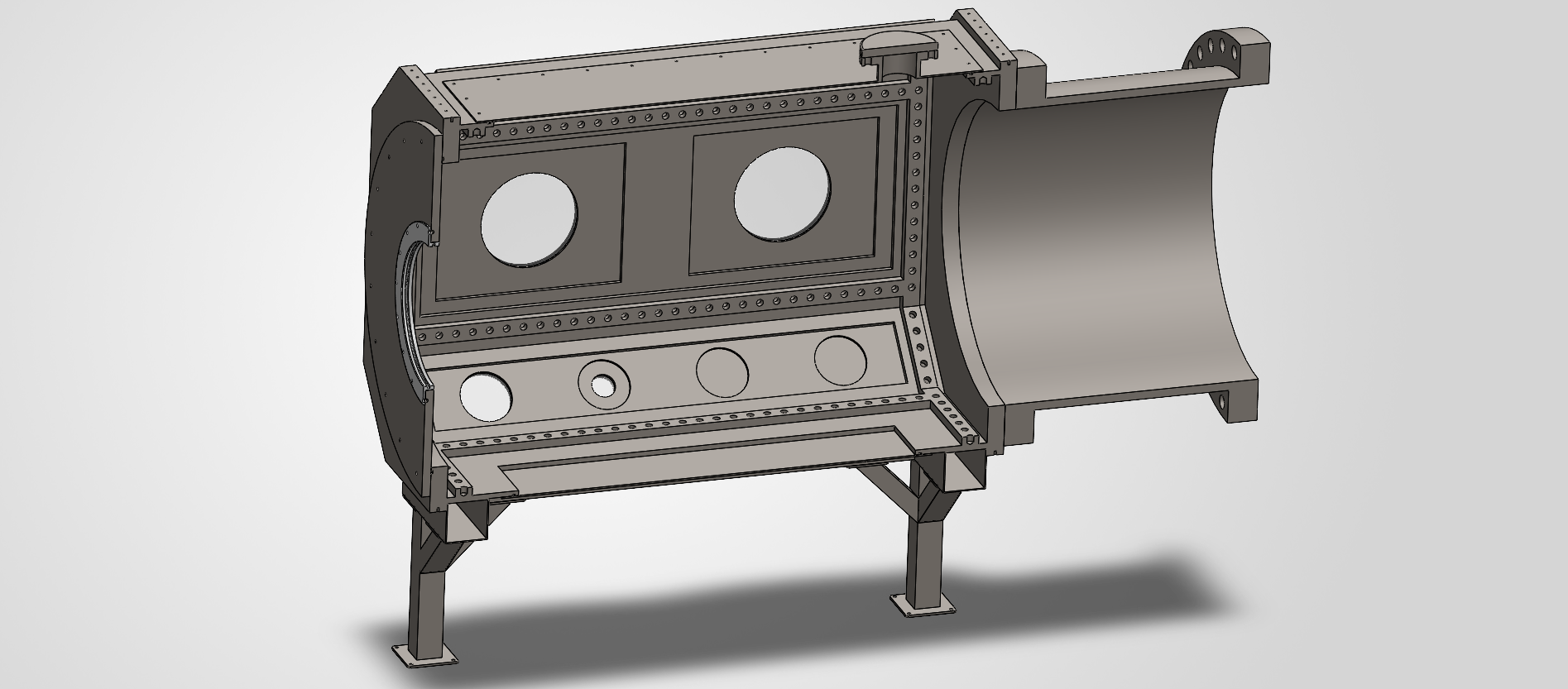
My work focused on the mechanical design and development of the test section and its supporting interfaces. I developed the preliminary CAD architecture around an octagonal pressure boundary, integrating modular window assemblies, internal mounting rails, nozzle and diffuser connections, sealing interfaces, and experiment-dependent hardware. The design process incorporated standardized engineering practices and components wherever practical, including ASME flange and pipe dimensions and established sealing design methods.
A major focus of my work was developing adaptable interfaces rather than designing the test section around a single experiment. Interchangeable window adapter plates allow smaller optical windows and diagnostic equipment to be installed without redesigning the primary test section structure. A modular nozzle interface similarly allows the system to accommodate varying nozzle geometries while maintaining a consistent connection to the test section.
I also worked directly with manufacturers and vendors to evaluate manufacturability, component availability, and potential fabrication methods. These discussions helped transition OCTANT from a conceptual CAD model toward a practical facility component, with design decisions continuously evaluated against machining, assembly, sealing, accessibility, and future maintenance requirements.
Innovative Solutions and Future Prospect
Project OCTANT represents a design philosophy centered around modularity, adaptability, and long-term facility use. Rather than optimizing the test section for one experimental configuration, the system was developed as a flexible platform in which optical access, instrumentation, nozzle interfaces, and internal mounting arrangements can be modified as research requirements evolve.
The octagonal architecture provides dedicated planar surfaces for windows, instrumentation, and structural interfaces while simplifying the integration of modular components. Adaptable window assemblies and nozzle connections further reduce the need for major structural modifications when experimental requirements change, allowing the core test section to remain consistent across different facility configurations.
Looking ahead, OCTANT will continue through detailed mechanical design, structural and finite element analysis, sealing validation, and manufacturing review before fabrication. The project establishes a foundation for a versatile experimental environment capable of supporting the evolving research requirements of Embry-Riddle’s reflected shock tunnel and future hypersonic testing programs.