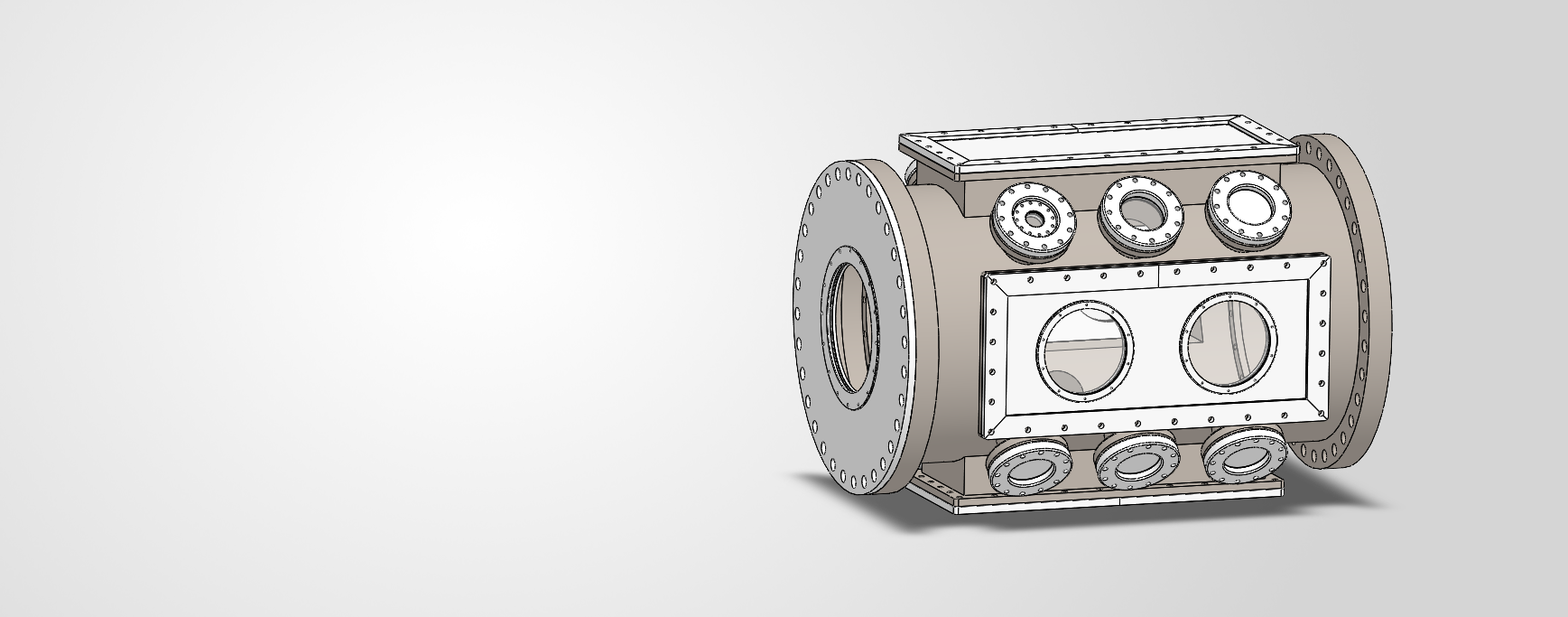
Test Section History:

From Pressure Vessel to Research Platform
The test section did not begin as the octagonal system seen today. Its development has been an iterative process of solving the challenges of optical access, pressure containment, experiment integration, nozzle compatibility, and manufacturability.
Each generation introduced new ideas, and even concepts that were ultimately replaced helped define the requirements that would become Project OCTANT.
Establishing the Foundation
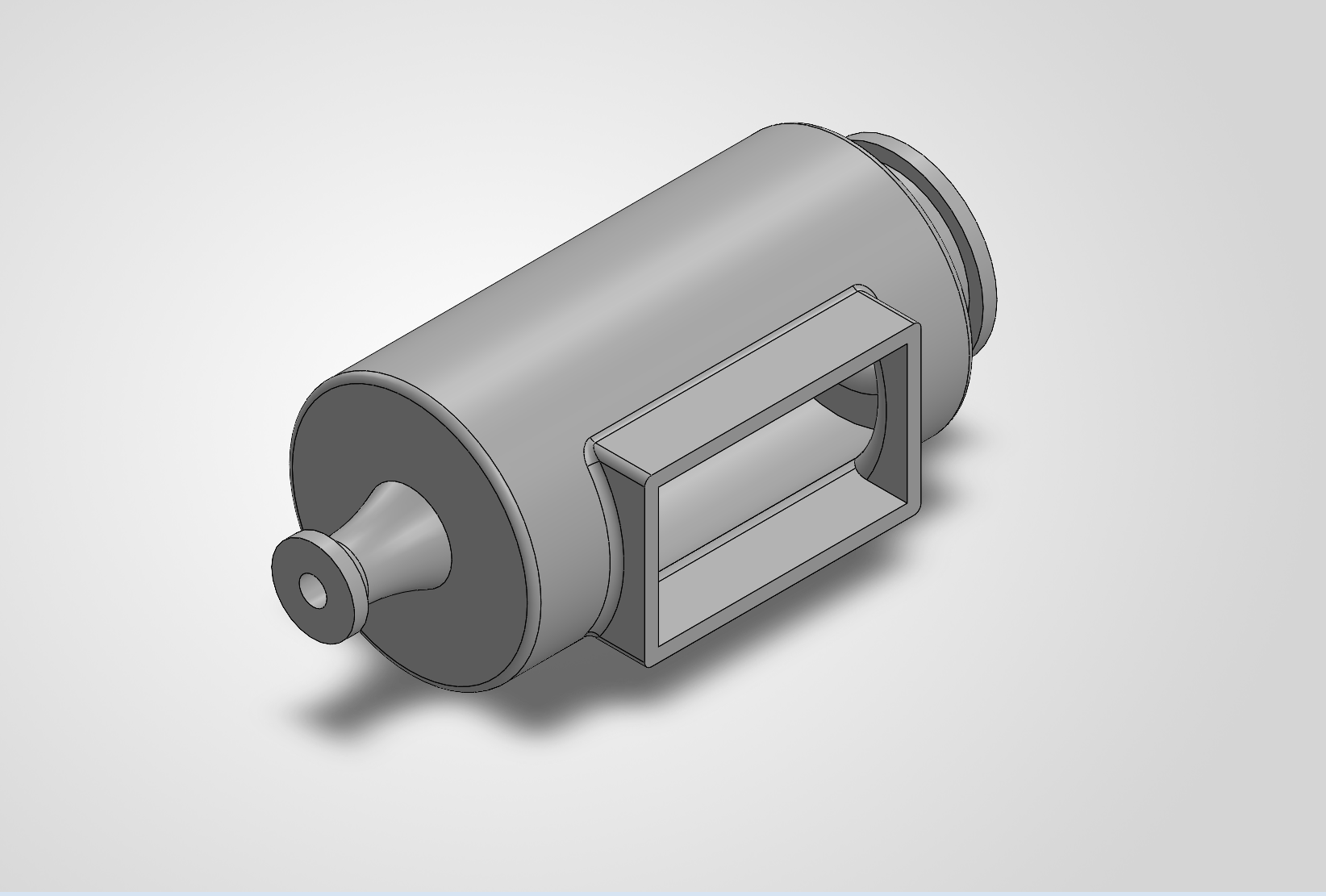
The first test section was a basic NPS 32 cylindrical concept built around a single rectangular optical window. It supported only one nozzle size and used fixed end caps without standardized flange connections.
At this stage, the goal was simply to establish the fundamental geometry of the test section. Standardization, modular interfaces, internal mounting, and adaptability had yet to become major design considerations.
Opening the Test Section
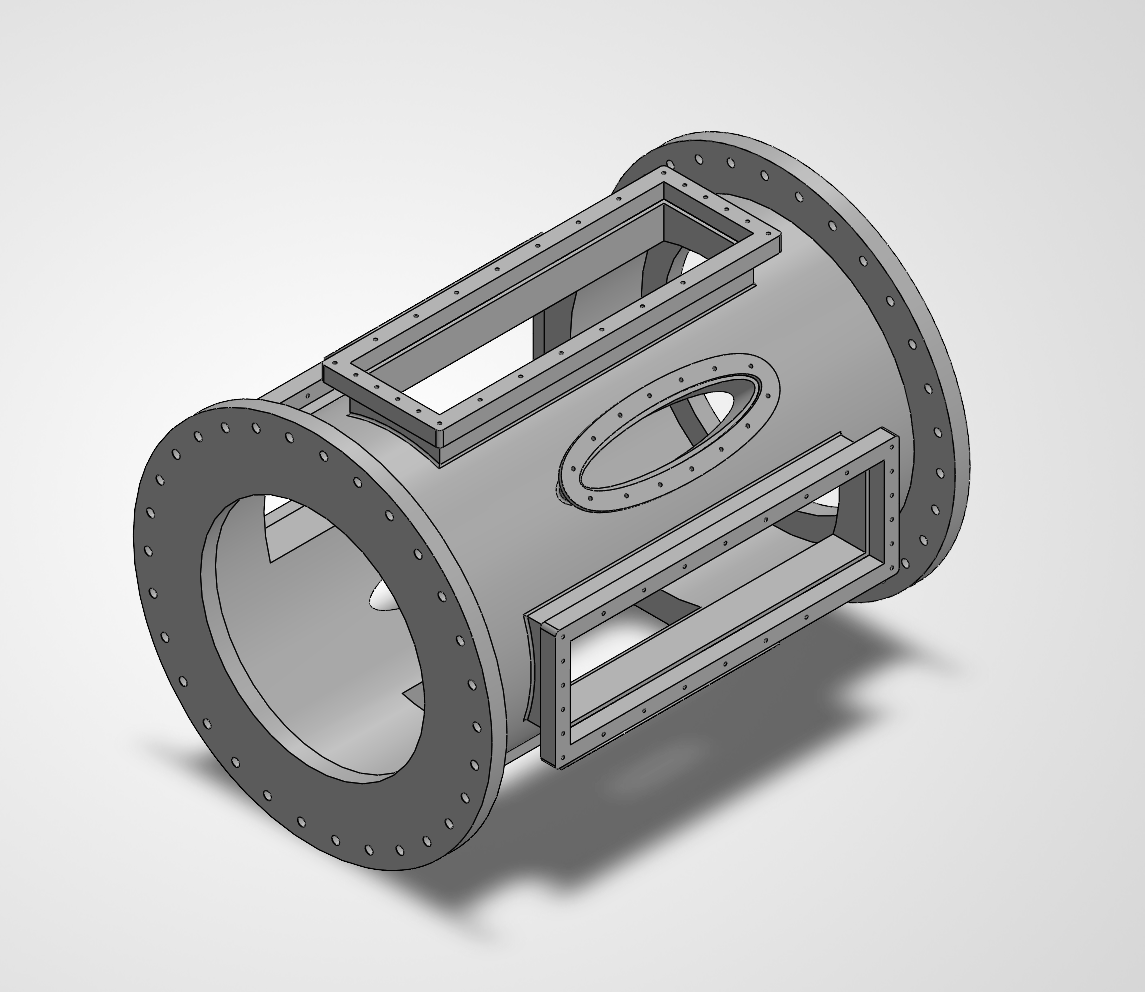
The second iteration dramatically expanded optical access through the addition of elongated oval viewports at 45-degree positions, along with dedicated top and bottom viewports. Upstream and downstream flanges were also introduced, and the main body increased from NPS 32 to NPS 36.
This generation also marked the beginning of a new design philosophy: developing around standardized interfaces rather than treating every connection as a custom component.
Maximizing Access and Integration
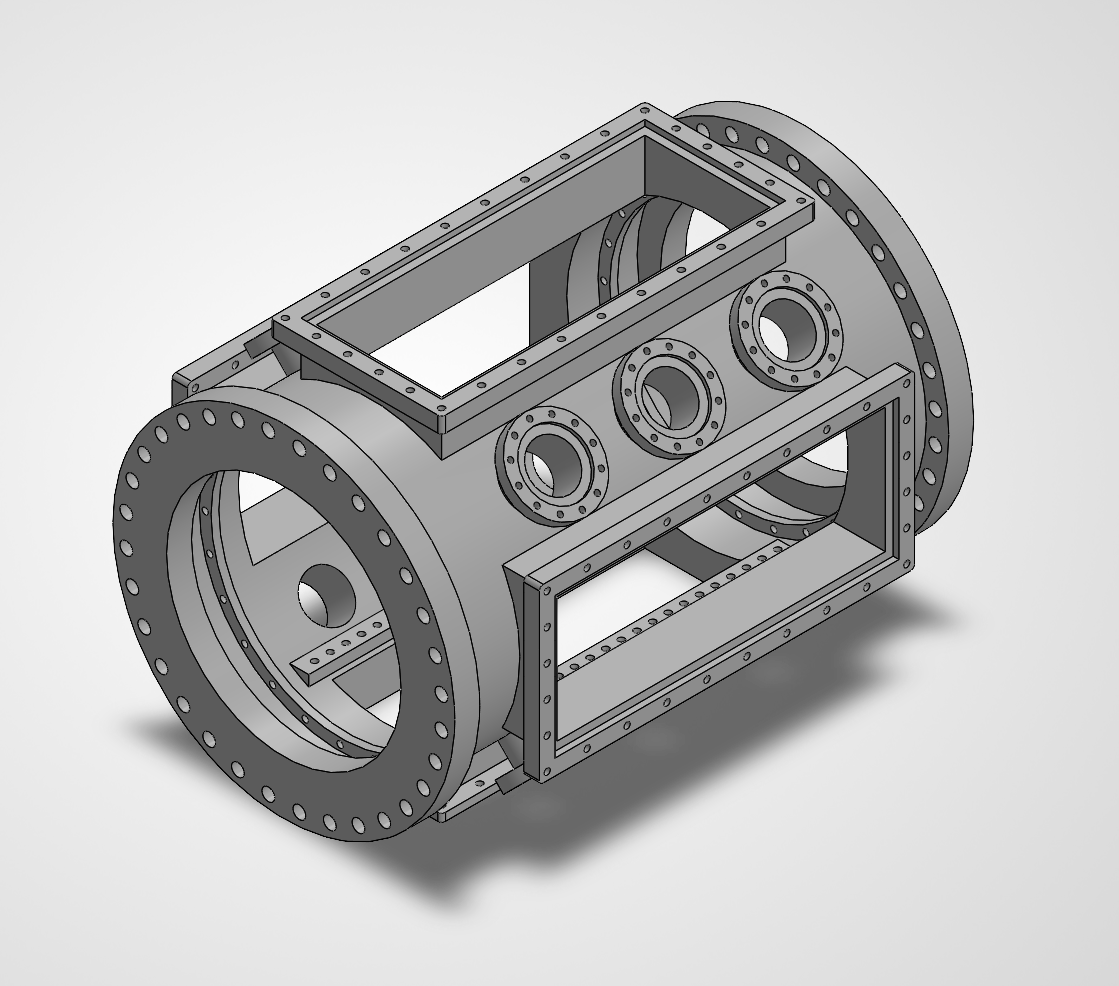
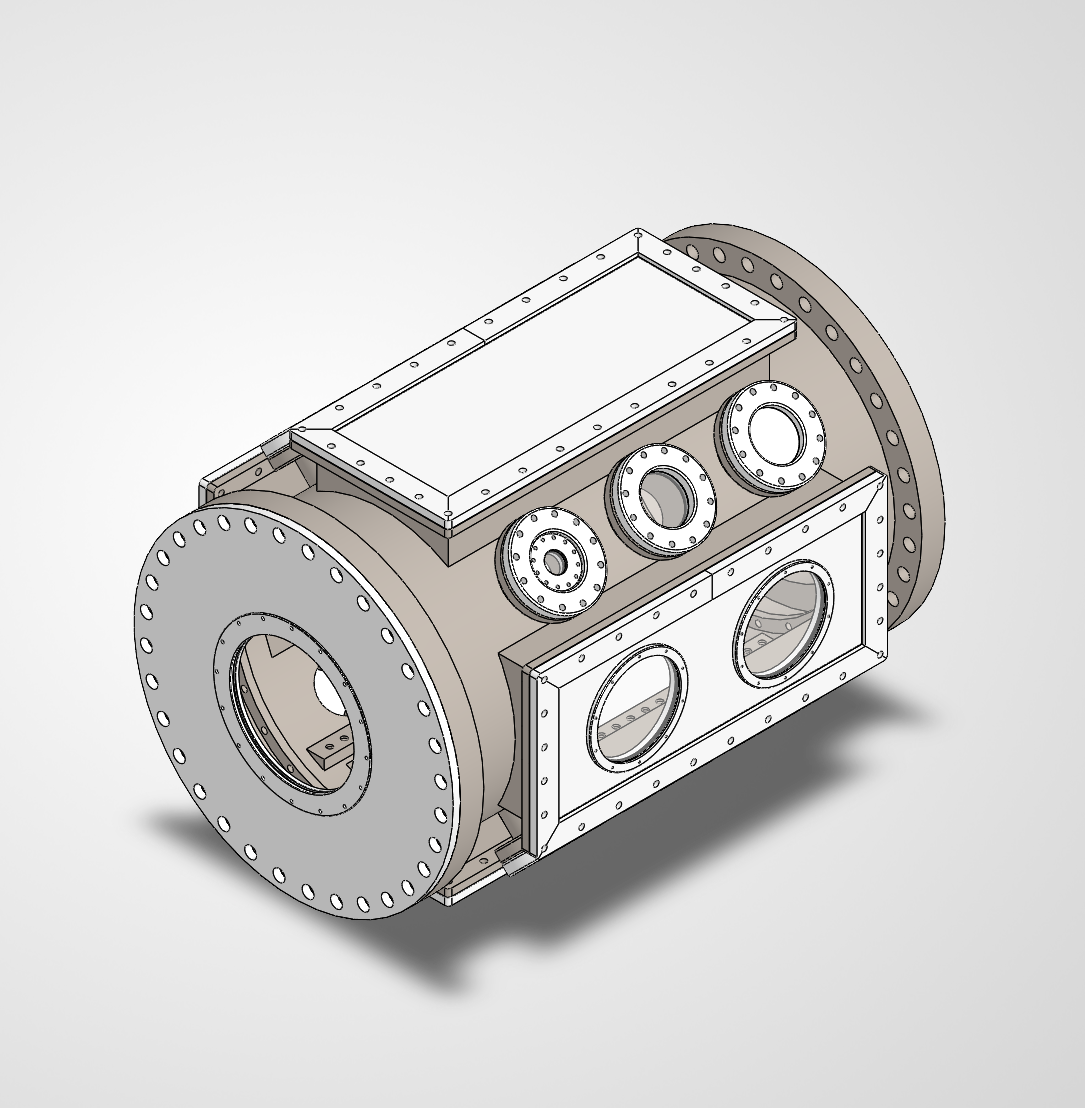
The third generation refined the test section around experimental access. The elongated 45-degree openings were replaced by three individual circular viewports at each 45-degree location, increasing flexibility while maximizing usable viewing area around the chamber.
Every viewport face was standardized to create common mounting interfaces, while internal mounting rails were introduced to provide dedicated attachment points for models, instrumentation, and experimental hardware inside the test section.
From Components to Complete Systems
With the overall cylindrical architecture established, development shifted toward engineering the interfaces themselves. A configurable nozzle-to-test-section connection was developed using replaceable nylon sleeves and a sliding seal system, allowing multiple nozzle sizes to interface with the same test section.
The viewport systems were developed in parallel. Rectangular ports incorporated circular optical windows, while the 45-degree interfaces supported interchangeable blank, 6-inch window, and adapted 3-inch window configurations. Complete sealing systems were developed for each interface, transforming the test section from a collection of openings into a modular experimental platform.
Rethinking the Structure
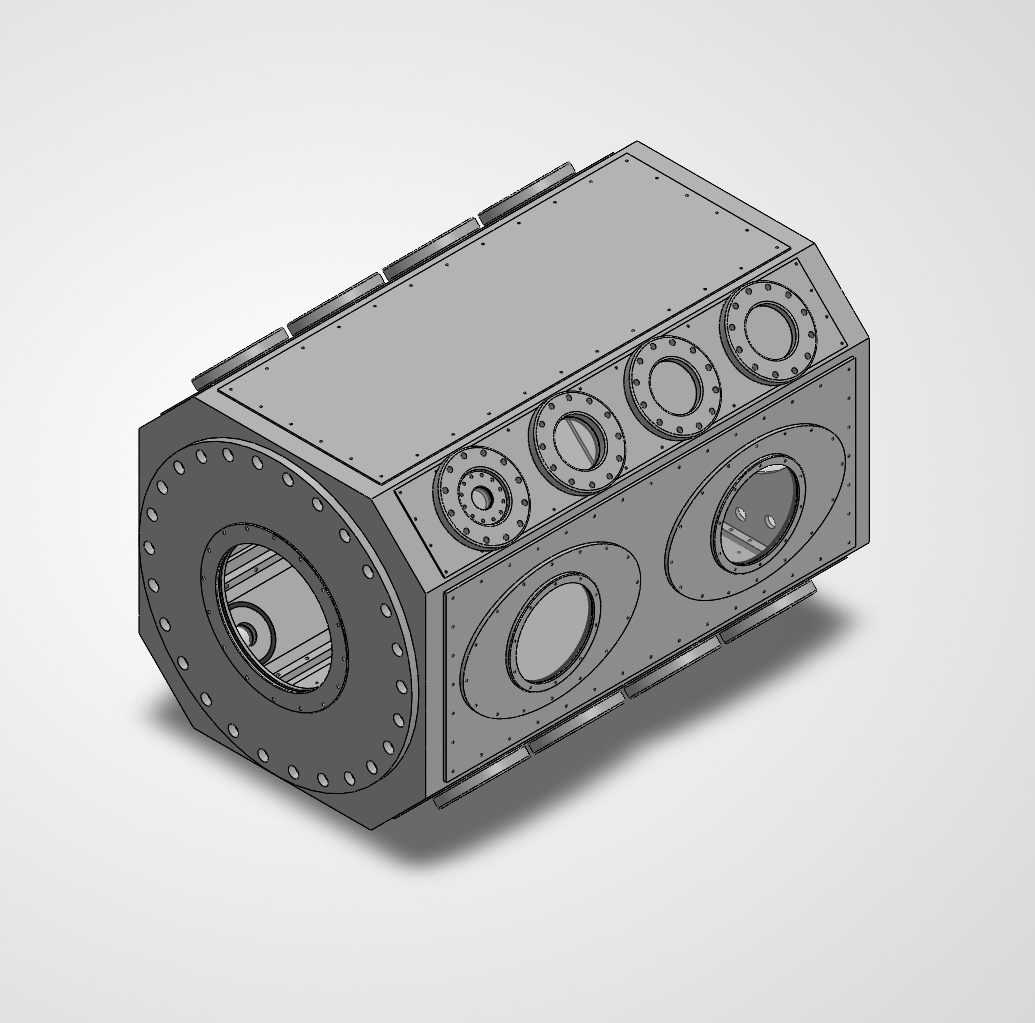
The fifth generation marked the largest architectural change in the project: the transition from a cylindrical vessel to an octagonal test section. The new geometry provided flat, dedicated interface surfaces and created a stronger foundation for future modularity.
Rather than immediately redesigning every subsystem, the proven interfaces developed for the cylindrical section were initially carried over to the new architecture. Adapter plates allowed the existing viewport systems to mount to the octagonal faces, establishing the first bridge between the previous design and what would become Project OCTANT.
Designed for the Octagon
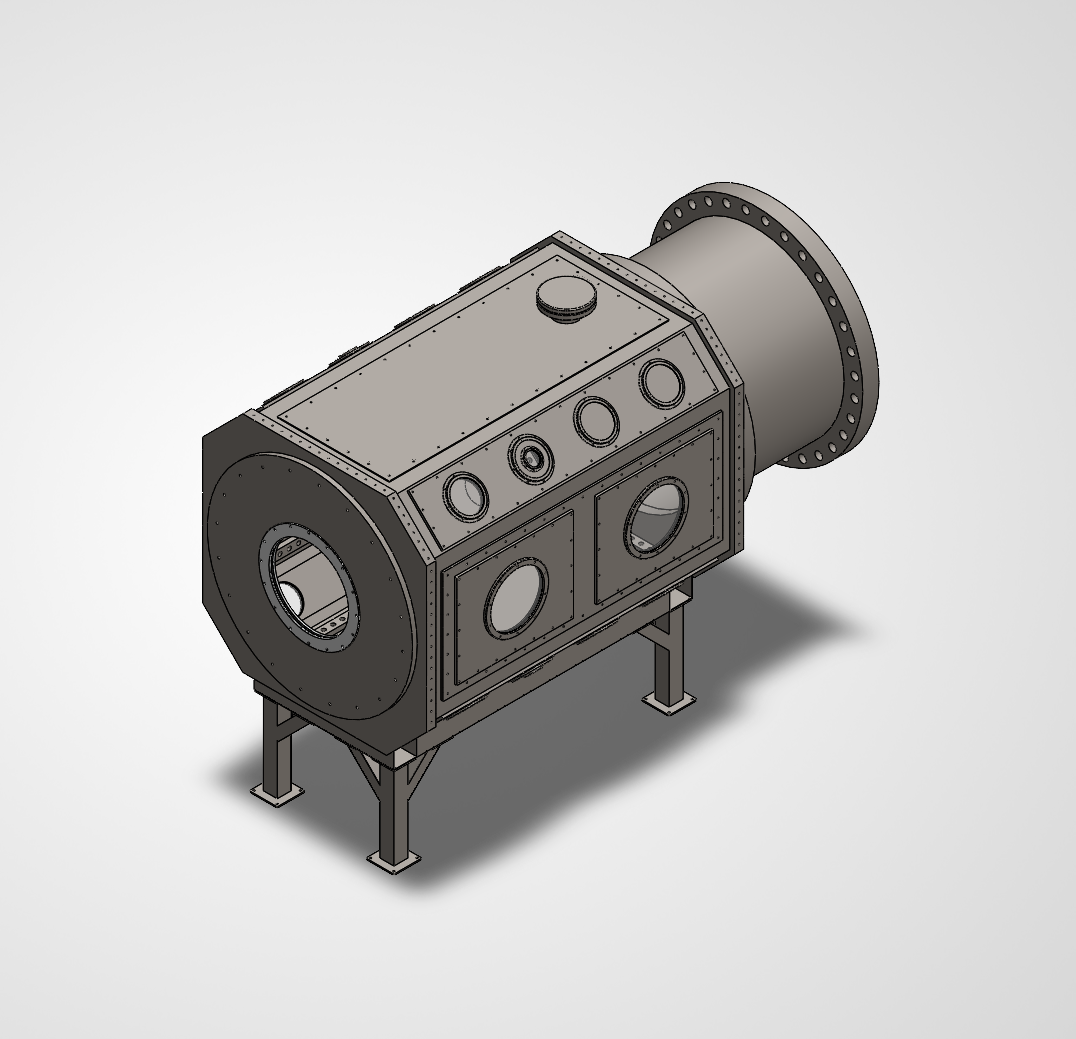
The current generation completes the transition into Project OCTANT. Rather than adapting hardware from the cylindrical test section, its viewport systems are now purpose-built around the octagonal architecture, combining rectangular side ports, square adaptable interfaces, and circular optical windows.
The complete assembly now incorporates its structural supports, integrated nozzle, standardized connections, and refined sealing systems. Offset upstream and downstream flanges provide larger interface connections and external rail mounting points, while the overall design has been refined around applicable standards, manufacturability, and integration with the surrounding reflected shock tunnel facility.
OCTANT is no longer simply a new geometry—it is a test section designed as a complete experimental system.